Why Choose FRP?
Fiber-reinforced polymer outperforms steel in tensile strength, durability, and weight — while staying immune to corrosion, electricity, and heat conductivity.
Six Reasons Engineers Choose FRP
Engineered composites that outclass steel across every critical metric.
Tensile Strength
FRP achieves 1200 MPa tensile strength — more than 3× stronger than Grade A-III steel rebar at 390 MPa. Smaller diameters carry the same structural load.
Corrosion Resistant
FRP does not corrode. In marine, coastal, or chemical environments where steel fails within years, FRP maintains its structural integrity indefinitely.
Lightweight
At 2.2 T/m³ versus steel's 7.8 T/m³, FRP is 75% lighter. This dramatically cuts transport costs, speeds up installation, and reduces structural dead loads.
Non-Conductive
GFRP does not conduct electricity or magnetic fields. Essential for MRI suites, power substations, rail infrastructure, and any environment requiring electromagnetic neutrality.
Eco-Friendly
No harmful chemical leaching into soil or groundwater. FRP production leaves a significantly smaller environmental footprint than steel smelting, with no toxic runoff.
Thermal Insulation
Unlike steel, FRP does not conduct heat. It eliminates thermal bridging in concrete structures, improving energy efficiency of buildings and reducing condensation risk.
Steel Rebar vs. FRP
A direct technical comparison across all critical parameters.
| Characteristic | Steel Rebar A-III | FRP Winner |
|---|---|---|
| Tensile Strength | 390 MPa | 1,200 MPa |
| Modulus of Elasticity | 200,000 MPa | 52,000 MPa |
| Density | 7.8 T/m³ | 2.2 T/m³ |
| Corrosion | ✗ Corrodes | ✓ Not Corrosive |
| Heat Conductivity | Conducts Heat | Does Not Conduct Heat |
| Electrical Conductivity | Electrical Conductor | Dielectric |
| Environmental Impact | — | Eco-Friendly, No Harmful Chemicals |
What Is FRP?
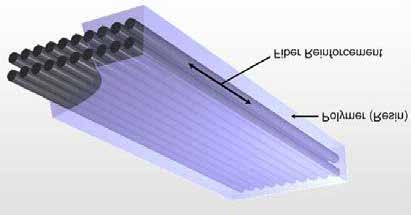
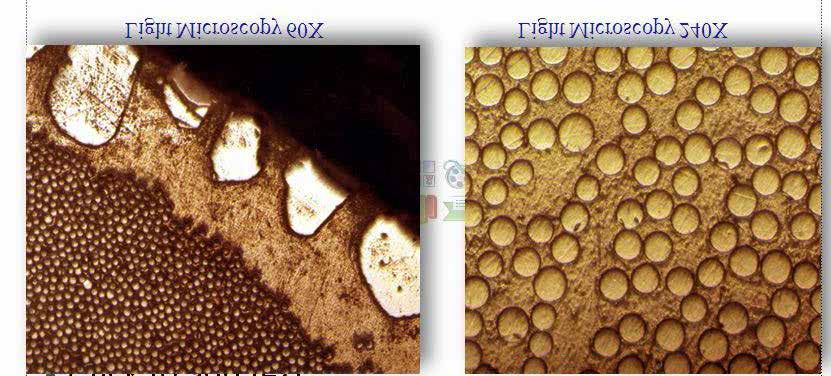
Fiber-Reinforced Polymer (FRP) is a composite material made by embedding continuous reinforcing fibers inside a polymer matrix. The combination unlocks mechanical properties that neither component can achieve alone.
Fibers — typically glass (GFRP), carbon (CFRP), or aramid (AFRP) — are the primary load-carrying element. Their high tensile strength and stiffness give FRP its structural power.
The polymer matrix — usually epoxy, vinyl-ester, or polyester thermosetting resin — binds the fibers together, transfers stress between them, and shields them from mechanical and environmental damage.
Independent Test Results
All values measured to ISO and ASTM standards on production samples.
Where FRP Is Used
From foundations to aerospace — FRP performs where steel cannot.
Construction
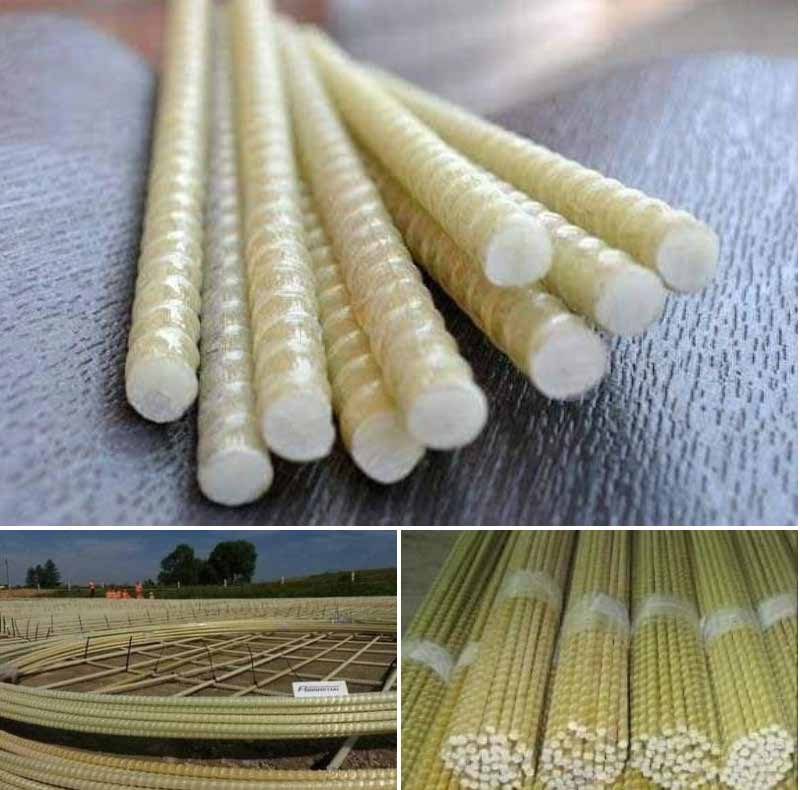
Concrete reinforcement for bridges, tunnels, marine structures, parking garages, foundations, and any structure where corrosion prevention is critical.
- Bridge decks & piers
- Seawater retaining walls
- Underground structures
- Hospital & MRI facilities
Marine
FRP's complete immunity to saltwater corrosion makes it the material of choice for offshore platforms, jetties, and underwater infrastructure.
- Offshore platforms
- Jetties & piers
- Desalination plants
- Ship components
Aerospace
The aerospace industry relies on CFRP and GFRP for structural components demanding the ultimate strength-to-weight ratio with electromagnetic transparency.
- Aircraft fuselage panels
- Satellite structures
- Antenna housings
- Interior components
Automotive
Weight reduction and high stiffness make FRP composites standard in performance vehicles, electric cars, and commercial transport body construction.
- Body panels & bumpers
- EV battery enclosures
- Leaf springs
- Drive shafts
Ready to Specify FRP?
Our engineering team can assist with material selection, structural calculations, and project specifications.